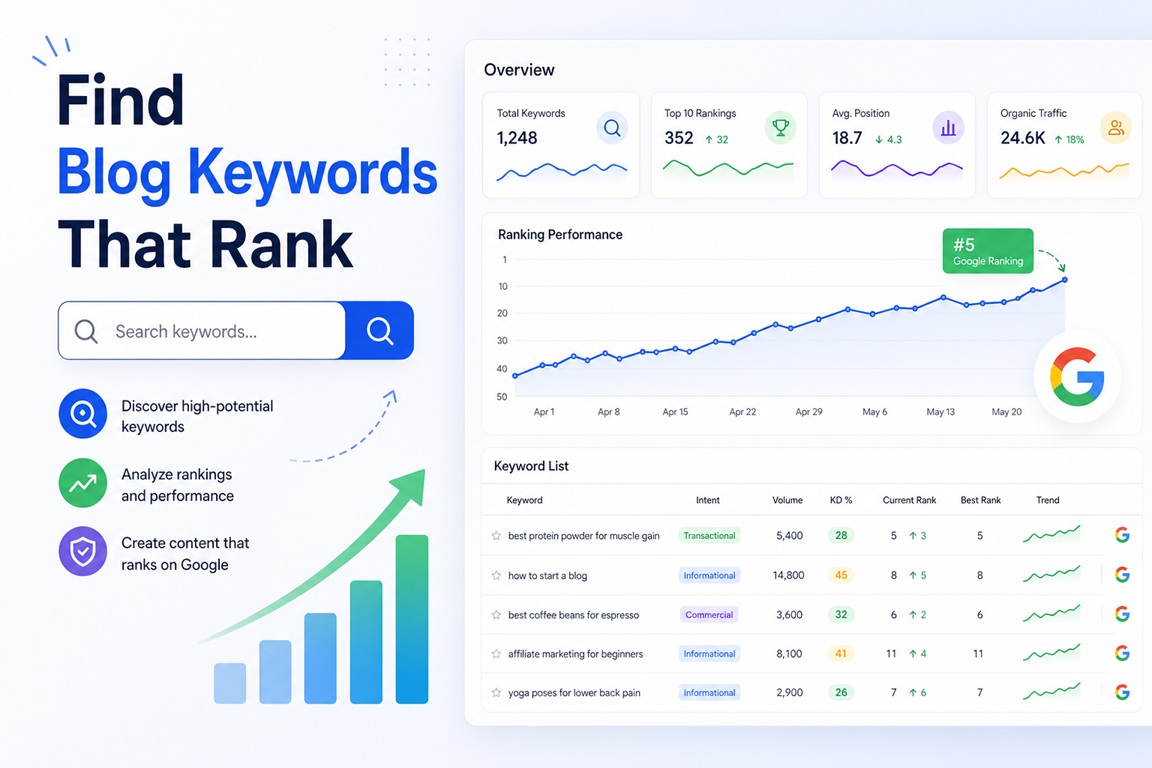
If you want traffic from search engines, you need the right keywords.
Many bloggers publish content but never rank because they target the wrong search terms.
Choosing keywords is one of the most important parts of blogging SEO.
The right keyword can bring:
- Consistent organic traffic
- Better Google rankings
- Affiliate clicks
- Long-term growth
In this guide, you’ll learn how to find blog keywords that rank, even if you’re a beginner.
🚀 What Are Blog Keywords?
Blog keywords are words or phrases people type into search engines like Google.
Example:
- “best hosting for beginners”
- “how to start a blog”
- “SEO tips for bloggers”
Keywords help search engines understand what your article is about.
⚡ Why Keywords Matter for Blogging
Without keyword research:
❌ You may write articles nobody searches for
❌ Competition may be too high
❌ Rankings become difficult
Good keyword targeting helps your content appear in search results.
🧠 What Makes a Good Blog Keyword?
A strong keyword usually has:
✔ Search demand
✔ Low or medium competition
✔ Clear search intent
✔ Monetization potential
🔥 Step-by-Step: How to Find Blog Keywords That Rank
⚡ Step 1: Start With a Broad Topic
Begin with your niche.
Example:
If your niche is hosting:
Start broad.
Broad Topics:
- Web hosting
- Blogging
- SEO
- WordPress
- Website speed
⚡ Step 2: Find Keyword Ideas
Use keyword tools to discover phrases.
Popular tools include:
Example Keyword Ideas
For hosting niche:
- Best hosting for beginners
- Shared hosting vs VPS
- Cheap hosting for bloggers
⚡ Step 3: Focus on Long-Tail Keywords
Long-tail keywords are longer phrases.
Example
Short keyword:
“Hosting”
Long-tail keyword:
“best hosting for beginner bloggers”
Why Long-Tail Keywords Work
They usually have:
✔ Lower competition
✔ Higher ranking chances
✔ Better search intent
⚡ Step 4: Check Keyword Difficulty
Not all keywords are easy.
Use SEO tools to check competition.
👉 Read: Best Free SEO Tools for Bloggers
Good Beginner Range
- Low competition
- Medium search volume
Avoid
Very broad keywords.
Example:
“SEO”
⚡ Step 5: Understand Search Intent
Search intent means:
Why someone searches.
Types of Search Intent
Informational
User wants answers.
Example:
“How to start a blog”
Commercial
User compares products.
Example:
“Best hosting for bloggers”
Transactional
User wants to buy.
Example:
“Buy web hosting”
⚡ Step 6: Analyze Google Results
Search your keyword manually.
Check:
- Article quality
- Competition strength
- Content length
Ask Yourself
Can you create better content?
⚡ Step 7: Use Google Suggestions
Google autocomplete gives ideas.
Type keyword into search.
Google suggests real searches.
Example
Search:
“Best hosting for…”
Suggestions appear automatically.
⚡ Step 8: Use Related Searches
Scroll to bottom of Google results.
You’ll find:
Related searches.
These provide keyword ideas.
⚡ Step 9: Check Competitor Keywords
Find competitor blogs.
Analyze:
- Top pages
- Ranking keywords
Helpful Tools
- Ahrefs
- Semrush
⚡ Step 10: Prioritize Low Competition Topics
Especially for new blogs.
Target:
Easy-to-rank phrases.
Example
Instead of:
“WordPress”
Use:
“WordPress hosting for beginners”
📈 Best Keyword Types for Bloggers
Informational Keywords
Good for traffic.
Examples:
- What is hosting
- SEO basics
Comparison Keywords
Good for affiliate income.
Examples:
- Hostinger vs Bluehost
- Shared vs VPS hosting
Buyer Keywords
High conversion.
Examples:
- Best hosting for bloggers
📊 Keyword Research Workflow
| Step | Action |
|---|---|
| 1 | Pick topic |
| 2 | Find ideas |
| 3 | Analyze competition |
| 4 | Check search intent |
| 5 | Publish optimized content |
🚀 Free Keyword Research Tools
Recommended tools:
- Google Trends
- AnswerThePublic
- Google Keyword Planner
⚠️ Common Keyword Research Mistakes
Avoid:
❌ Targeting only high-volume keywords
❌ Ignoring search intent
❌ Choosing random topics
❌ No competition analysis
🧠 Keyword Formula for New Bloggers
Best keyword strategy:
Low Competition + Search Volume + Intent
🔥 Keyword Examples for Hosting Blog
Examples:
- Best hosting for beginners
- Is cloud hosting worth it
- Hosting vs VPS explained
- Cheap hosting for WordPress
❓ Frequently Asked Questions
What keywords are best for blogs?
Long-tail keywords often work best.
How do beginners find keywords?
Use keyword tools and Google suggestions.
Is keyword research important?
Yes, it helps rankings.
Should bloggers use long-tail keywords?
Yes, especially new blogs.
🎯 Final Verdict
Keyword research is essential.
Good keywords help blogs rank faster.
Focus on:
✔ Low competition
✔ Search intent
✔ Helpful content
🏁 Final Thought
Don’t guess keywords.
Research first.
Good keyword targeting builds long-term traffic.